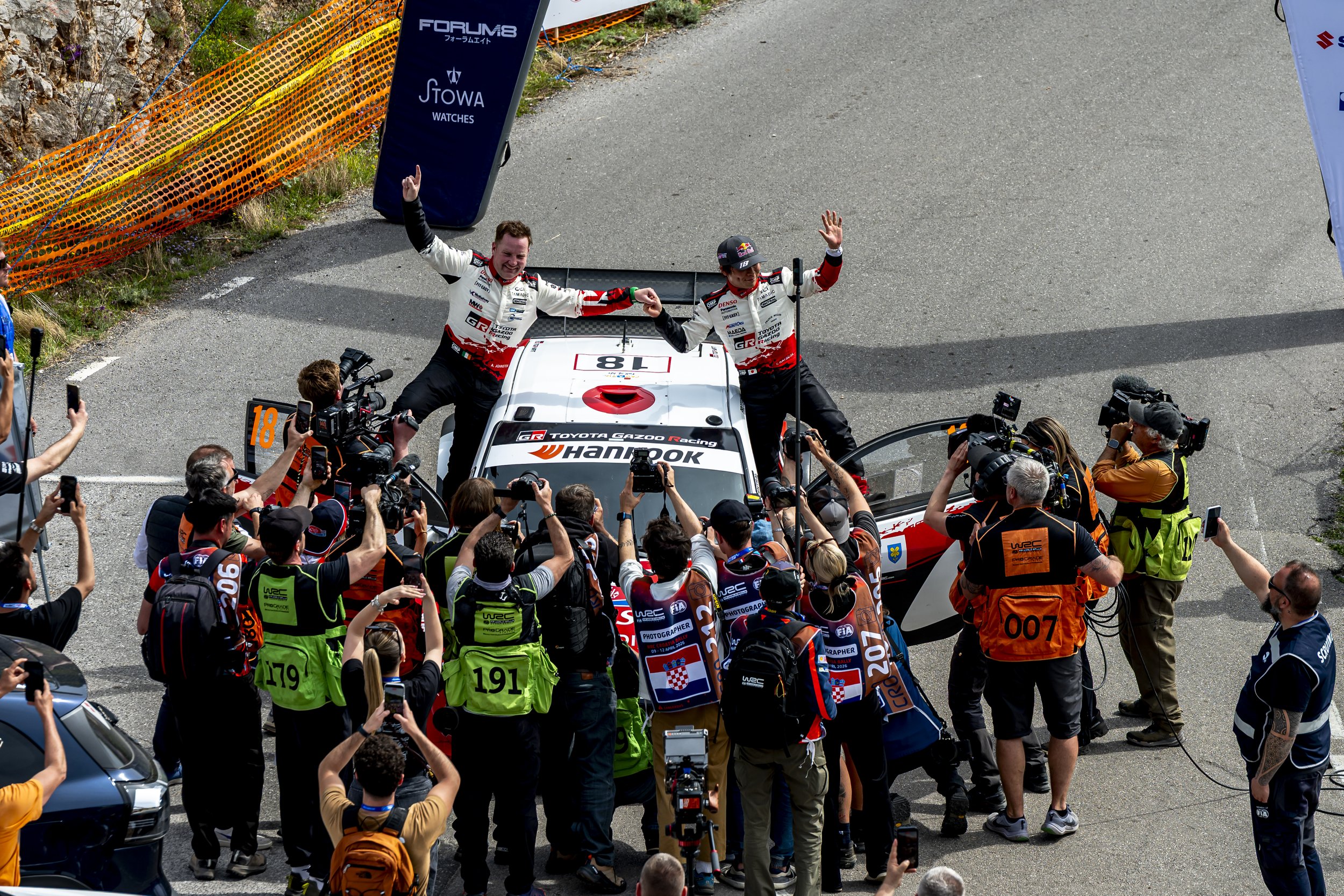
Championship leader Takamoto Katsuta has won two rallies in a row ahead of the upcoming Canary Islands. Photo: Christian Flodin / FotoINorr
The WRC Rally Islas Canarias 2026 arrives this week with the feeling of something both new and historic—a Mediterranean classic stepping fully onto rallying’s biggest stage. Set across the volcanic roads of Gran Canaria, the event marks its 50th edition and serves as round five of the FIA World Rally Championship, bringing world-level competition to terrain long revered in European rallying circles.
After double wins, both in Safari Rally and then Croatia, Takamoto Katsuta is now the championship leader with 81 points, 7 points clear of Elfvyn Evans, that struggeled in both events. Additional 6 points after is Swedish driver Oliver Solberg, that also suffered in both Kenya and Crotia, but managed to pick up maximum points on the sundays in both events.
To top out the Toyota 1-2-3-4 is Finnish driver Sami Pajari with 52 points, just three points clear of Hyundai French driver Adrien Fourmaux.
Based in Las Palmas de Gran Canaria, the rally unfolds over four days and 18 special stages, covering just over 320 kilometres of pure asphalt. The character of these roads is unique: high-grip volcanic tarmac that invites commitment, yet punishes even the smallest misjudgment. This is a big difference from Croatia, that also is an asphalt rally, but with low-grip. Drivers will thread through tight mountain hairpins, sweeping coastal sections and fast, flowing climbs where rhythm matters as much as outright speed.
There is also a celebratory tone to this year’s edition. A return to iconic locations—including a stadium-style opening stage—blends heritage with spectacle, while new sections add unpredictability to an already demanding route. Saturday’s long mountain stages and Sunday’s decisive Power Stage promise to shape the outcome, with tyre management expected to play a crucial role under the island’s heat and changing microclimates.
Written by: Christian Flodin